Short answer: oil tank removal SEO works when the site is built around why people need you, which is usually a real estate transaction, an insurer, or a heating conversion. That means town pages that explain the local permit and inspection path, a page for each trigger (inspection found a tank, buyer wants a sweep, inherited house, oil-to-gas conversion), certification and closure paperwork shown plainly, honest cost explanations instead of invented price ranges, and a fast way for an agent or attorney to reach you. A generic “environmental services” page with a list of towns wins none of that.
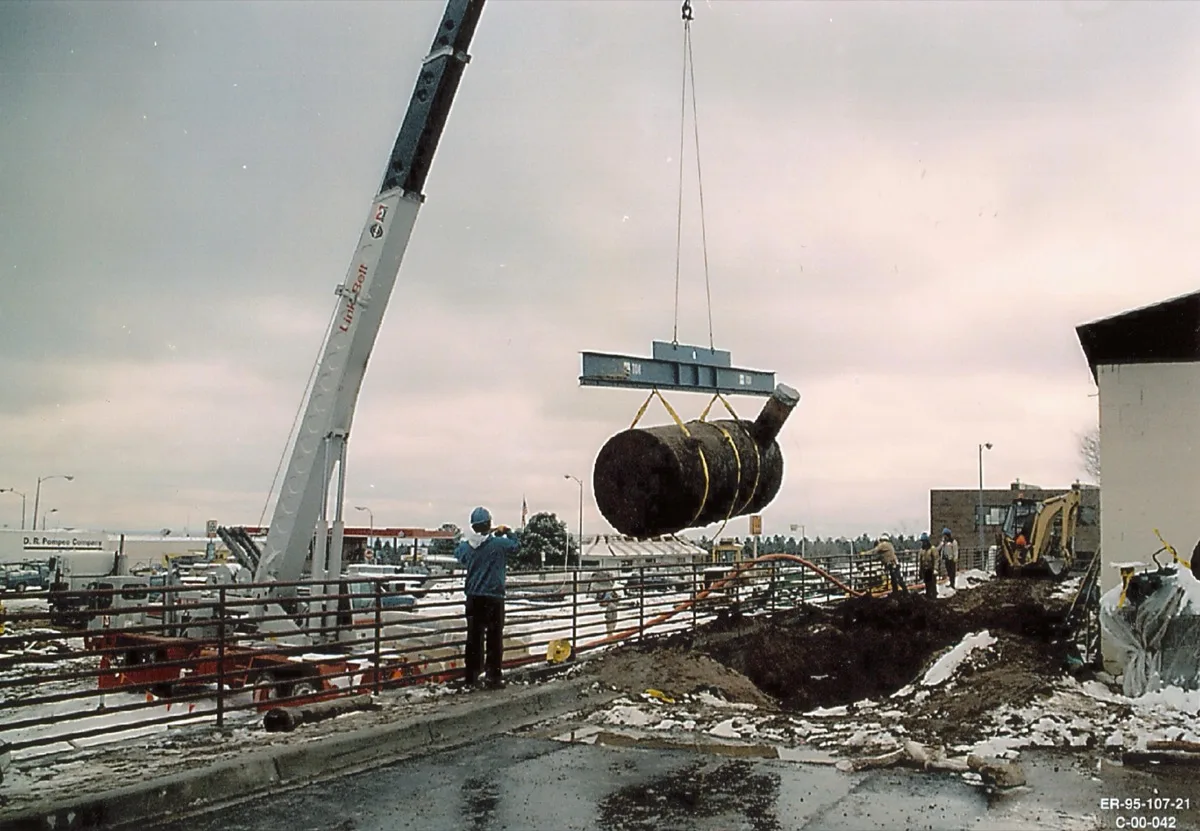
Why Tank Removal SEO Is Not Like Other Contractor SEO
A roofer or a plumber sells to a homeowner who has a problem and time to compare. A tank removal company often sells to three people at once: the owner who pays, the buyer who wants the tank gone, and the agent or attorney who needs the paperwork before closing. The search usually starts after a home inspector spots a fill or vent pipe, or after a buyer's insurer asks about a buried tank. By the time someone types “oil tank removal near me,” there is often a date on a contract.
That changes what your site has to do. It has to rank, but it also has to answer the question that decides the call in the first thirty seconds: can you do this before my closing, and will I get the paperwork the buyer's side needs? It also has to explain decisions people did not know they would face, such as removal versus abandonment in place, what a tank sweep can and cannot tell you, and what happens if contamination is found. The contractor whose site explains those clearly tends to become the one agents recommend.
The Searches That Bring In Tank Removal Jobs
Keyword tools show modest volumes for tank removal in most towns, and many local phrases show almost nothing. That is normal for a regional trade where the demand is concentrated in older housing stock that once heated with oil. The total opportunity is spread across several names for the service and a long tail of situation searches. These are the patterns we build pages around:
| Search pattern | Examples | How to use it |
|---|---|---|
| Service + town | “oil tank removal [town],” “underground oil tank removal near me,” “tank sweep [county]” | Highest intent. Often searched by a buyer, seller or agent with a contract deadline, so speed to answer matters as much as rank. |
| Transaction searches | “do I need a tank sweep to sell my house,” “buyer wants oil tank removed,” “oil tank found during home inspection” | The trigger for most residential jobs. One honest page per situation earns links from agents and inspectors too. |
| Decision searches | “oil tank removal vs abandonment,” “fill oil tank with sand or remove,” “abandoned oil tank insurance” | Owners comparing options. Answer the question fairly; the contractor who explains it gets the call. |
| Cost searches | “oil tank removal cost,” “tank sweep cost,” “soil remediation after tank removal cost” | High volume, hard to answer honestly. Explain what changes the price instead of publishing a number you cannot stand behind. |
| Problem searches | “oil smell in basement,” “old fill pipe in yard,” “oil tank leaking what to do” | Urgent and sometimes a spill. These pages need the reporting step first and the sales pitch second. |
Use the language your customers use. Homeowners say “oil tank” and “buried tank”; agents say “tank sweep” and “closure letter”; regulators say “underground storage tank” or, in New Jersey, “unregulated heating oil tank.” Your pages should carry all of them naturally. Our keyword research guide for home services walks through how to find the real phrases in your market, starting with Search Console.
Town Pages Built on Permits, Not Swapped City Names
A town page earns its place when it tells someone in that town something they could not learn from your homepage. For tank work, the obvious thing is the permit and inspection path. Tank removal and abandonment are usually permitted and inspected locally, and the details differ: which office issues the permit, who inspects, what has to be submitted before the job is closed out. In New Jersey, DCA Bulletin 95-1B says removal or abandonment of a residential heating oil tank requires a demolition permit, is inspected by the local fire subcode official, and needs a sketch of the tank's location before the certificate of approval is issued. A page that explains that sequence for a specific town, in plain language and accurately, is genuinely useful.
Good town pages also include what you can honestly say about local conditions: the neighborhoods where you have done the most work, typical access challenges (tanks under driveways, in tight side yards, under additions), and photos from real jobs in that town with the customer's permission. Only build pages for areas you actually serve. A page for a county you would “consider” brings leads you will turn down, and a turned-down agent rarely calls twice.
Our guide to service-area pages for home services covers the structure; the tank-specific part is making the permit section real.
Getting Calls Only After Agents Run Out of Names?
We build the town pages, transaction content and profile setup that put tank contractors in front of buyers and sellers before the referral list does. We also write SEO guides for heating oil and propane companies and excavation contractors.
Trust Content: Certification, Paperwork and the Spill Question
Tank customers are nervous about two things: hiring someone who is not allowed to do the work, and discovering a cleanup bill they did not expect. Your site should address both directly.
- Certifications and licenses. Show exactly what you hold, in which states, with details a customer or attorney can verify. In New Jersey, Bulletin 95-1B states that only NJDEP-certified individuals and firms can perform services on unregulated underground heating oil tanks, and that there are separate certifications for installation, closure and subsurface evaluation. If your state has similar rules, say which ones you meet.
- A paperwork page. Explain what the customer receives at the end of the job: permit close-out, inspection approval, disposal records, soil sample results if taken. Agents and buyers search for this vocabulary, and a page that shows a redacted example is a strong conversion asset.
- What happens if you find contamination. Explain the process honestly, including the reporting step. In New Jersey the bulletin directs that contamination be reported to the DEP hotline, with any cleanup proceeding through the state's unregulated heating oil tank program. Customers trust the contractor who tells them this up front.
- Insurance. State the coverage you carry if customers or agents ask for certificates, and how to request one.
Keep every claim on these pages accurate. A certification you let lapse, or a guarantee about “clean” results, is the kind of statement that costs far more than it earns.
Google Business Profile for a Contractor Who Works On-Site
Tank removal crews work on the customer's property. Google's guidelines for representing a business say service-area businesses that visit or serve customers at their location should set a service area and should not show an address where they do not serve customers. Set the profile up that way from the start. Choose the most specific primary category Google offers for the work you do; the category list changes, so check what is available in your own profile rather than copying a competitor. List removal, tank sweeps, abandonment and soil testing as separate services with honest descriptions.
Photos matter more here than in most trades. A customer cannot see the work after the yard is backfilled, so before, during and after photos (excavation, the tank coming out, the cleaned site) are your proof. Ask happy customers for reviews that mention the town and the situation in their own words, for example a sale that closed on time. Our Google Business Profile guide for home services goes deeper on categories, services and photos.
Referral Pages for Agents, Inspectors and Attorneys
Real estate agents, home inspectors and closing attorneys send a large share of residential tank work, and they search too, usually for a contractor who can move quickly and document the job. Give them their own page: how to request a sweep or removal for a listing, typical scheduling lead times you can actually meet, what paperwork you deliver and when, and a direct contact that reaches a person. A page like this also earns local links when agents and brokerages share it, which matters in a niche where competitors often have very few. Our local link building guide covers how to turn those relationships into links without buying them.
Answer Cost and Decision Questions Without Inventing Numbers
“How much does oil tank removal cost” is one of the biggest searches in this trade, and one of the easiest to answer badly. A single range copied from another site will be wrong for half your jobs. A better page explains what moves the price (tank size and depth, access, concrete or structures over the tank, permit fees in your towns, disposal, and whether contamination is found) and what your quote includes. If you publish numbers, publish only ones you will honor, and date them.
The same goes for removal versus abandonment in place. Many owners arrive believing filling the tank with sand is always cheaper and always acceptable. A fair explanation of when abandonment is allowed and when buyers or insurers push for removal earns trust even from readers who end up choosing the more expensive option, which is usually the point.
What to Measure
Rankings are a weak scoreboard for a trade where one job can be worth more than a month of small calls. Track quote requests by town and by trigger (sale, conversion, insurance, inherited house), calls from your Business Profile, how many leads came from agents or inspectors versus search, and how many quotes turn into jobs. In Search Console, watch which town and situation pages earn impressions, and treat a page with impressions but no clicks as a title and description problem you can fix quickly. Our local SEO tracking guide shows how to set this up.
When SEO Is Not the First Move
If you are new to an area with no reviews and no relationships, a website alone will be slow. Introducing yourself to the agents, inspectors and attorneys who handle older homes in your towns, answering their calls fast, and asking satisfied customers for reviews will build momentum sooner. SEO earns its keep once you have a reputation worth showing, because it brings in the owners and buyers who search before anyone gives them a name.
Frequently Asked Questions About Oil Tank Removal SEO
What is SEO for oil tank removal companies?
It is the work of getting a tank removal, tank sweep or abandonment contractor found when homeowners, buyers, sellers and real estate agents search for the service in the towns you work. In practice that means a Google Business Profile set up for a service-area business, a page for each town that explains that town's permit and inspection steps, content that answers the transaction questions that trigger most jobs, visible certification and closure paperwork, and reviews that mention the town and the situation.
Who searches for oil tank removal?
Mostly people in the middle of a home sale: a buyer whose inspector flagged a fill pipe, a seller whose buyer asked for a tank sweep, or an agent trying to keep a closing date. Others are converting from oil to gas or a heat pump, inheriting a house, or dealing with an insurer who will not renew with a buried tank on the property. Each of those situations deserves its own page because the questions and the urgency are different.
Should I publish oil tank removal prices on my website?
Only prices you will actually honor. Tank jobs vary with tank size, depth, access, what is built over the tank, permit fees and whether contamination is found, so a single number either scares people off or sets an expectation you cannot meet. A page that explains what drives the price, what is included in your quote, and what could change it once the tank is out is more useful and more defensible.
Does my business need to show an address on Google Business Profile?
Google's guidelines say service-area businesses that serve customers at the customer's location should set a service area and should not show an address where they do not serve customers. Tank removal contractors work on the customer's property, so most should be set up as service-area businesses. Check the current guidelines in your own profile before changing anything.
How do certifications help oil tank removal SEO?
They are the trust signal customers and agents look for, and in some states they are a legal requirement. In New Jersey, for example, the Department of Community Affairs' Bulletin 95-1B says only individuals and firms certified by the Department of Environmental Protection may perform services on unregulated underground heating oil tanks. Put the certifications you actually hold on your site, with the details a customer can verify.
How long does SEO take for a tank removal company?
Our working estimate across home-service trades is that a properly set-up profile and site can start showing map movement in roughly 60 to 90 days, with competitive organic rankings taking around four to six months. Tank removal is a regional, lower-volume niche, so a strong page can move faster in a county with few competitors and slower where established firms have years of reviews. These are estimates, not guarantees.
Sources: Google Business Profile Help, “Guidelines for representing your business on Google”; New Jersey Department of Community Affairs, Bulletin 95-1B, “Removal/Abandonment Requirements for Residential Heating Oil Tanks” (revised September 2017, code references updated September 2022). Tank rules vary by state and municipality. Timelines on this page are Rank Easy Digital estimates, not guarantees.
Be the Tank Contractor Buyers Find First
Rank Easy Digital builds the town pages, transaction content and Business Profile setup that help oil tank removal companies get the call before the closing date gets close.